Product Description
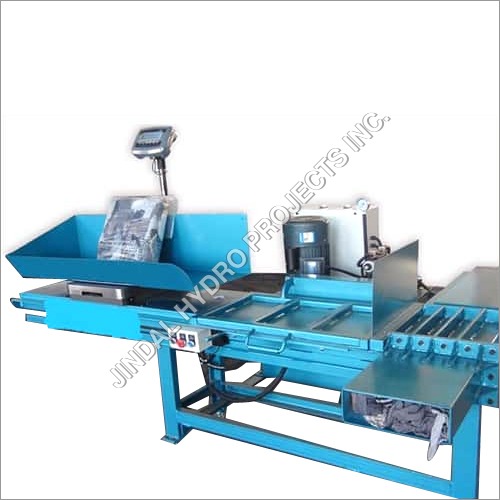
JINDAL HYDRO PROJECTS INC. Bagasse Baler Machine used worldwide in the process of recycling and compressing different products. Bagasse Baler machine that plays a great role in recycling and utilizing the bagasse left after the crushing of sugar cane. All of you have to do is just collect all the scattered bagasse and put in it the bagasse baler, this baling press machine will the convert bagasse into bales. After it convert this bagasse into bales, then different companies can take advantage of it in various way. Bagasse baler available in different models, shapes and properties. These machines are easy to install and the operation is not complex. A team of highly qualified engineers and technicians are making the latest bagasse baler that ensure high- quality performance for the whole life. All Bagasse Baler Machine models are supplied with an instruction manual. Our all press are Quality assured, Cost effective, Low maintenance.
The offered range is widely acknowledged owing to their attributes such as:
- Ease to operate
- Durability
- High tensile strength
- Ability to withstand pressure
- Resistance against corrosion
- Quality assured
- Cost effective
- Low maintenance
Customizable Baling to Suit RequirementsOur Bagasse Baling Machine offers fully adjustable chamber and bale sizes, enabling you to package materials according to operational needs. Whether you require standard 24" x 18" x 36" bales or custom specifications, the machines flexible design ensures optimal compatibility with diverse bagasse or agro waste processing environments.
Advanced Hydraulics and Safety FeaturesEquipped with powerful hydraulics delivering up to 2000 psi and heavy-duty construction, this machine guarantees efficient and consistent bale compaction. Integrated emergency stop and interlocked guard systems further enhance operator safety, making it particularly suited for demanding industrial applications where reliability is paramount.
Efficient Production and Low MaintenanceWith a throughput of 68 bales per hour and a lifting capacity of up to 100 tonnes per day, this baling machine is engineered for high productivity. The powder-coated or painted mild steel frame, along with low-maintenance components, ensures long service life and reduced operational downtime for manufacturers and exporters.
FAQs of Bagasse Baling Machine:
Q: How does the Bagasse Baling Machine operate and what materials can it process?
A: The machine functions through a hydraulic system that compresses bagasse, agro waste, and other biomass materials into compact bales. It can be set to automatic or semi-automatic modes via PLC-based controls for easy operation.
Q: What are the main advantages of using this baling machine in industrial settings?
A: Key benefits include high compaction ratios for efficient storage and transport, low maintenance requirements, robust corrosion-resistant build, customizable bale sizes, and enhanced safety features for operator protection.
Q: What is the typical process for baling bagasse using this equipment?
A: Material is loaded into the chamber, where hydraulic pressure compresses it. Once the bale reaches the desired size, its securely tied and ejected, ready for storage or transport. The entire process is managed through automated or manual controls based on your chosen operation mode.
Q: Where is the Bagasse Baling Machine typically installed and used?
A: This equipment is commonly installed in agro-industrial plants, sugar mills, biomass processing facilities, or export warehouses where large volumes of bagasse and agro waste need compacting for handling and shipment.
Q: What are the options for customizing the baling machine to my requirements?
A: The chamber size, bale size, lifting height, belt length, and lifting speed can all be tailored to meet specific needs. You can also select various finishes (powder coated or painted) and optional features like forklifts and semi-rotary operation.
Q: When should maintenance be performed and what is involved?
A: Routine maintenance should be carried out in accordance with the manufacturers guidelines, typically involving checking hydraulic fluids, cleaning the system, ensuring all controls function correctly, and inspecting safety mechanisms to ensure optimal performance.
Q: What type of power supply and motor does the machine use?
A: The machine operates on a 415V, 3-phase electric supply with a three-phase induction motor (7.5 - 10 HP), ensuring energy efficiency and reliable performance in continuous usage scenarios.








 Send Inquiry
 Send Inquiry
 Send SMS